Call Now: Free Estimates(612)-987-1566
    Deck Stain Colors for a Minnesota Deck: Pick for Year Two, Not the Sample Card
    ← Back to Blog

    Deck Stain Colors for a Minnesota Deck: Pick for Year Two, Not the Sample Card

    August 28, 2026 Mike Webster

    The color you pick isn't the color you live with

    Webster's Quality Painting has stained Minnesota decks since 2000, and the right deck stain color is the one that still looks good after two winters, not the one that wins on the sample card. UV and freeze-thaw pull every stain on a horizontal deck floor toward silvery gray, so color here is a moving target. The real question isn't what looks best on the card, but which color still looks intentional after two Twin Cities winters. Free estimate: (612)-987-1566.

    The counter-intuitive part most color guides miss: you are not choosing the color your deck is on day one. You're choosing the color it becomes by year two. A rich espresso deck and a warm cedar deck can look worlds apart in the driveway on install day and end up surprisingly close after 24 months of Prior Lake sun and forty-odd freeze-thaw swings a winter. So the smart way to pick a deck stain color here is to picture the fade before you pick, not after. That single shift, choosing for the aged look instead of the fresh one, is what separates a deck that ages on purpose from one that just looks tired.

    What is the most popular deck stain color, and does popular mean right?
    The most popular deck stain colors land in the warm mid-brown family: cedar, chestnut, and honey-toned semi-transparents that let the grain show. They're popular for a good reason that has nothing to do with fashion. Mid-browns hide dirt, pollen, and the normal foot-traffic wear a deck picks up, and just as importantly they fade gracefully, because a mid-brown drifting a shade lighter still reads as a mid-brown. That's the quiet advantage nobody puts on the sample card. A Twin Cities note on why that matters here: a huge share of the decks we stain around Lakeville, Burnsville, and the outer-ring suburbs are pressure-treated pine and cedar from 1990s and early-2000s builds. Those species drink stain differently, and a warm mid-brown is forgiving on both, which is part of why it's the default we reach for out here.
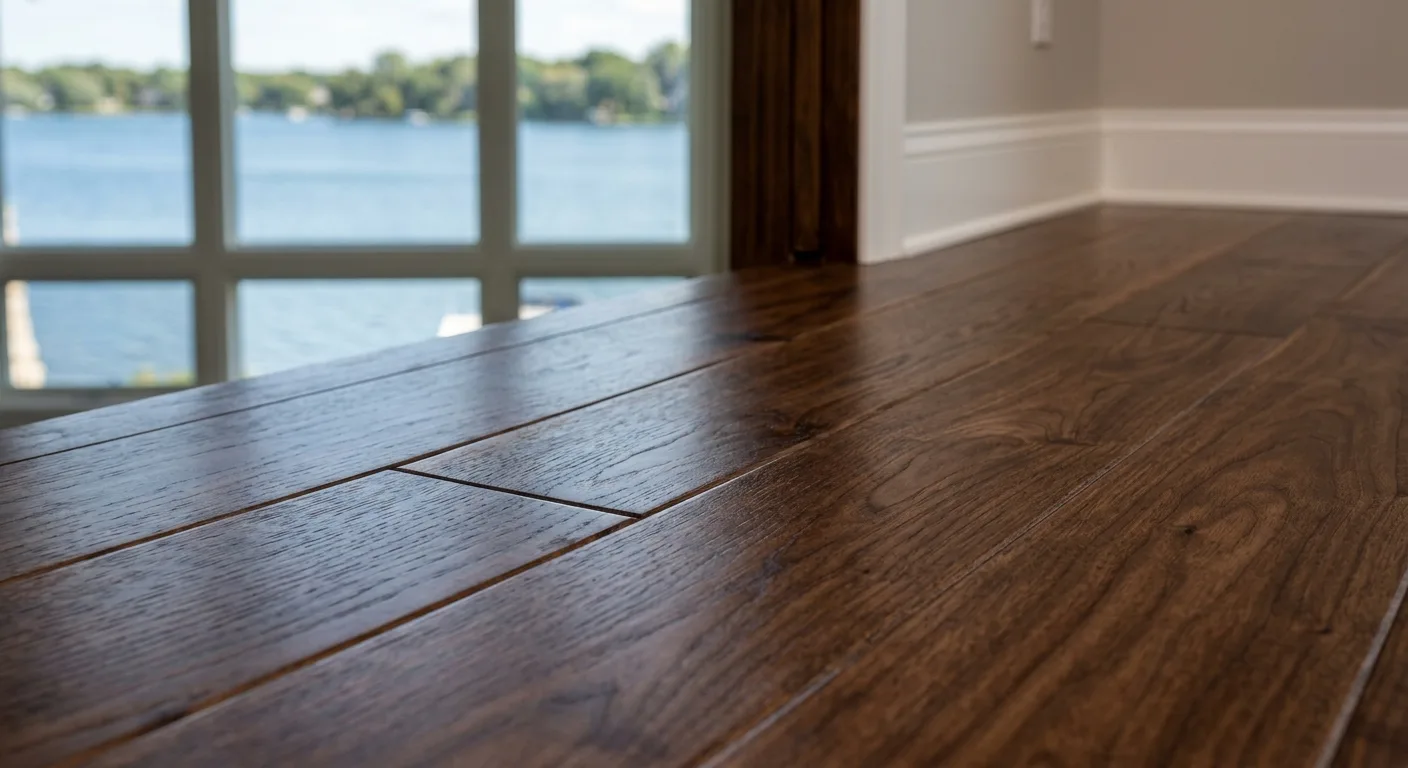
    Deck stained in a lighter semi-transparent color that lets the wood grain show and ages gracefully in Minnesota sun.

    Popular is an average, and your deck isn't average
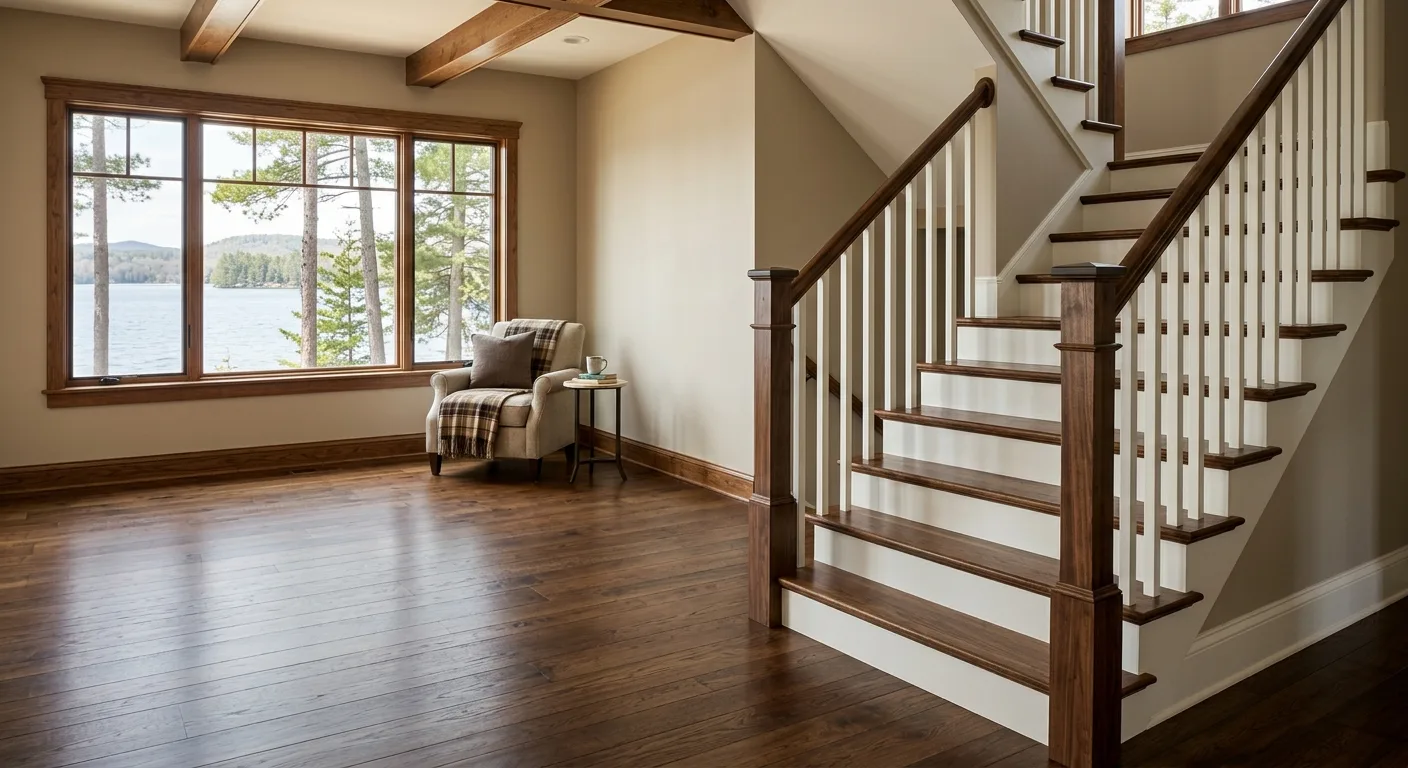
    But popular is not the same as right for your deck. Popular is an average, and your deck isn't average: it has a specific sun exposure, a specific siding color next to it, and a specific age of wood underneath. A north-facing shaded deck can carry a color the sample card would never sell you, and a blazing south-facing deck will chew through a trendy dark tone in a season. The honest move is to treat the popular colors as a starting point, then adjust for your actual conditions. Not sure where your deck lands? Call Mike at (612)-987-1566 and describe the exposure, and we'll point you at a family that ages well on your specific deck.
    Deck floor and railings finished in coordinating deck stain colors a few tones apart from the house siding.

    Should you stain a deck light or dark? The Minnesota fade decides it
    For most Minnesota decks in real sun, lighter wins, and the reason is aging, not looks. Lighter and mid-tone stains fade gracefully because they're already close to where UV wants to take the wood, so as they wear they thin and soften instead of announcing it. Dark stains fight the fade. They look stunning on install day, then the sun-baked boards lighten faster than the shaded ones, and you get a visible wear pattern where the deck gets the most afternoon light. Here's the split we actually walk clients through, because it's rarely a flat light-or-dark answer. On a full-sun deck, especially west or south-facing, go lighter or mid-tone, since dark boards get genuinely hot underfoot in a Minnesota July and show the fade line first. On a shaded or north-facing deck, a darker, richer tone can work beautifully and hold its depth far longer, because it isn't taking the UV beating. On older or previously dark-stained wood, darker or solid often makes sense, since the grain isn't worth showing and depth hides the mismatch. And on newer cedar you want to show off, a lighter semi-transparent lets the grain read and ages the most gracefully of anything.
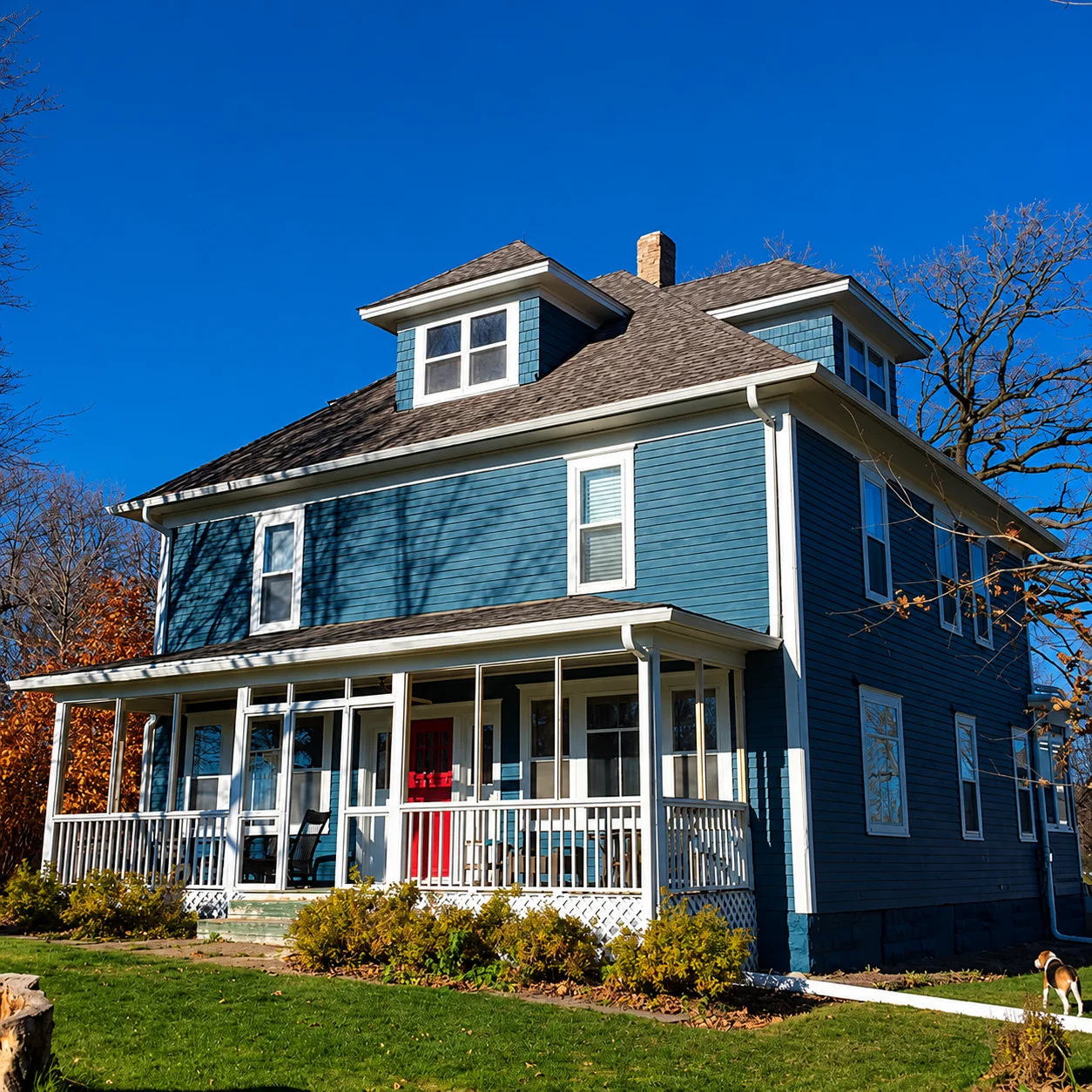
    Two-story home freshly painted in deep navy blue with crisp white trim and wraparound porch.

    Why light usually wins: it's the freeze-thaw, not just the sun
    The dark decks aren't the ones people regret on day one. They're the ones people call about in year two, when the sunny half has faded off the shaded half and the whole floor looks blotchy. The deeper reason light tends to win here is freeze-thaw. Minnesota can swing dozens of freeze-thaw cycles in a single winter, and every one of them works moisture into the boards and back out, thinning the finish a little more each pass. A lighter color hides that gradual thinning because there's less contrast between fresh finish and worn finish. A dark color has nowhere to hide it. If you're set on dark, put it where the sun isn't: a covered or shaded deck is where a deep color actually earns its keep.
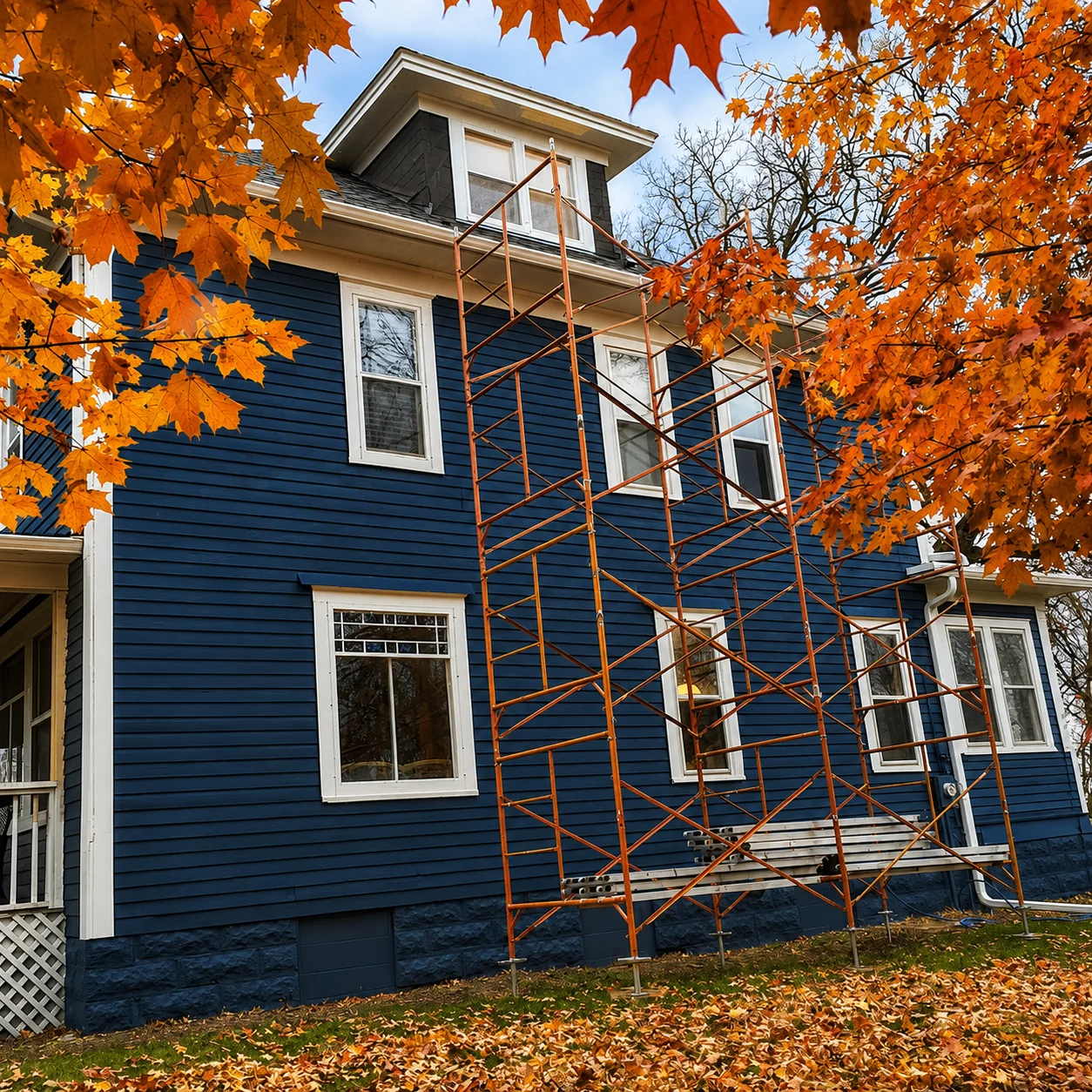
    Webster's Quality Painting crew mid-project on a navy blue exterior repaint with scaffolding in autumn.

    How to test a deck stain color on your actual boards (not a chip)
    The single biggest color mistake we correct isn't picking the wrong family. It's trusting the chip. Stain on a paper card and stain soaked into your real deck boards are almost never the same color, because your wood has its own tone, its own age, and its own thirst, and all three shift the result a shade or two. So the only test that means anything is stain on your wood. Here's the way to do it right, in order. First, pick two or three candidates in the same warm-or-cool family, not wild opposites, because you're narrowing, not gambling. Second, brush each one onto a few real, cleaned deck boards, ideally in a low-traffic spot near the house so you can live with it for a day. Third, look at it dry, not wet, because wet stain reads darker and richer than it will cure, and judging a wet sample is how people end up with a deck two shades darker than they wanted. Fourth, check it in morning light and again at 5 p.m., because a color that looks perfect in flat noon light can go muddy or cold on north-facing boards late in the day. Why we do this on every job: after 26 years we still put the real product on a few of your actual boards before committing the whole deck, because the sample never lies about your wood the way the card does. It's the cheapest insurance on the entire project.
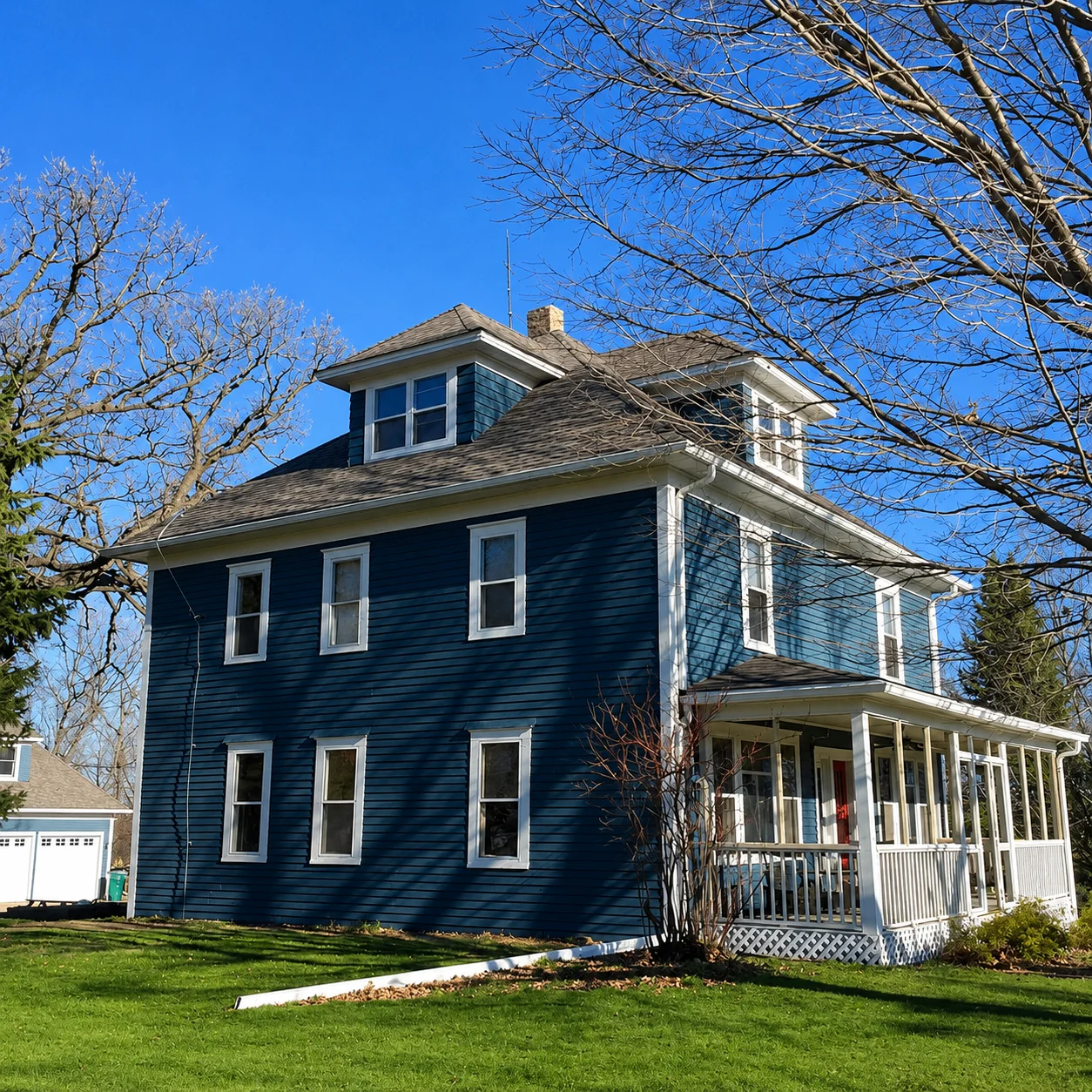
    Completed navy blue exterior repaint with bright white trim under a clear sky.

    Solid vs. semi-transparent: how much of your wood shows through
    This is also where the choice between a solid and a semi-transparent stain quietly enters the color conversation, because it changes how much of your wood's tone shows through. On a semi-transparent, your board's natural color is part of the final look. On a solid, it's mostly hidden, which is exactly why solid gives you the widest color range. Our professional deck staining service handles color selection and application end to end, including the on-your-boards sample step, so you're deciding from the real thing instead of a guess.
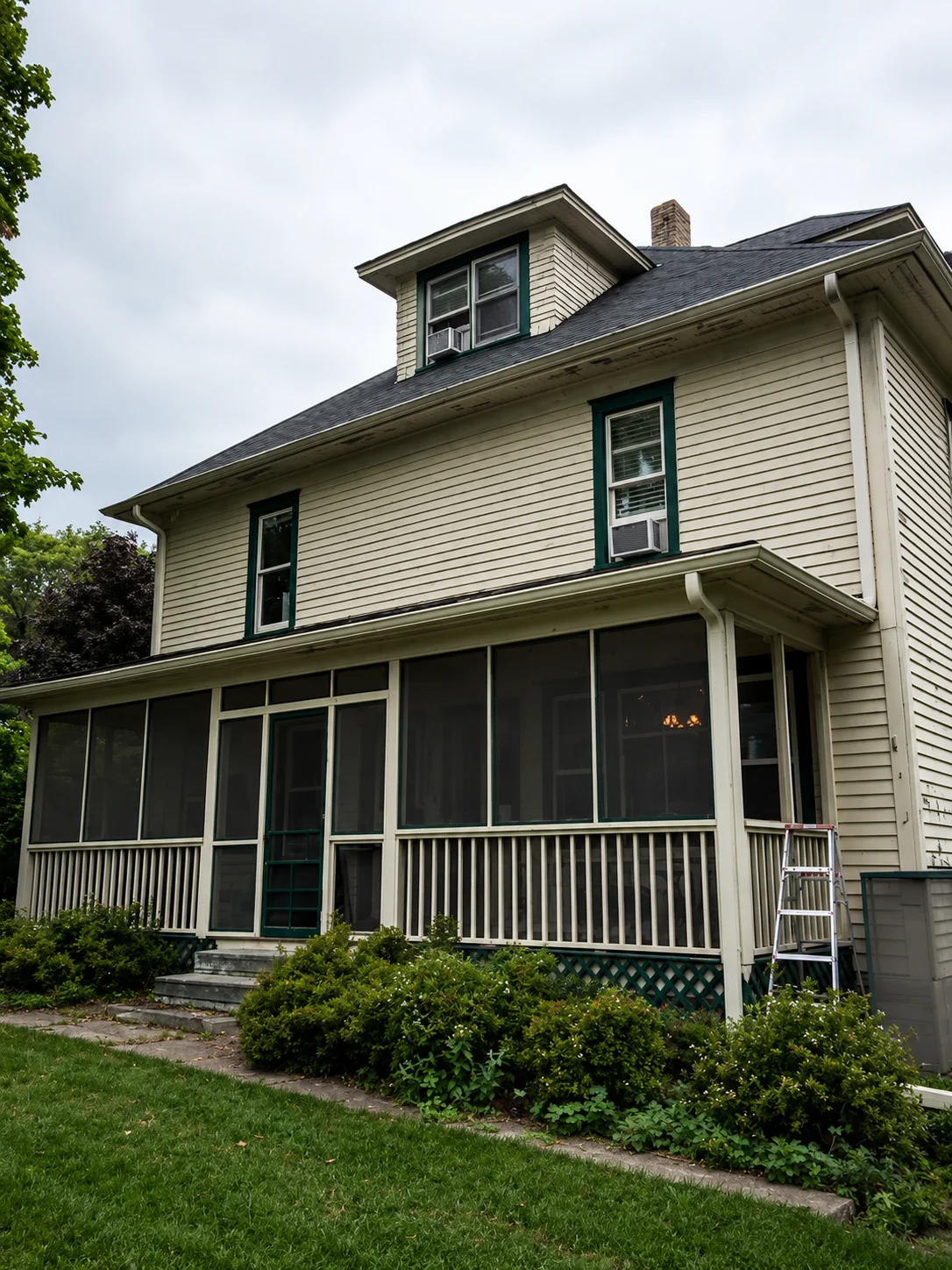
    Before shot: original cream siding with dark green trim, prior to Webster's Quality Painting exterior repaint.

    Deck painting or staining: why color range shouldn't push you to paint
    Homeowners chasing a very specific color sometimes drift toward painting the deck, because paint offers a wider palette than stain. On a walking surface in this climate, that's usually a trap, and it's worth naming before you commit. Paint sits on top of the board as a film. On a horizontal deck floor that takes foot traffic, standing snowmelt, and freeze-thaw, that film cracks and peels, and once it peels you're scraping and repainting forever. Stain penetrates and wears by fading, so you clean and re-coat instead of stripping. If the only reason you're leaning toward paint is the color, a solid stain gets you almost the whole palette without the peeling, and it's built for a deck floor. That's the move nine times out of ten. If you want the color reach of paint without the failure mode, solid stain is the answer. It hides the grain and offers close to a paint-like color range, but it's formulated to live on a deck and it re-coats far more sanely than paint ever will. We dig into the full tradeoff in our companion guide on paint versus stain for a Minnesota deck, but the short version for color shoppers is simple: let the palette pull you toward solid stain, not toward paint. And if your deck ties into a fence, we'll often plan the two together so the whole yard reads as one finished space, matching a fence stain to a newly stained deck rather than finishing either one in isolation.
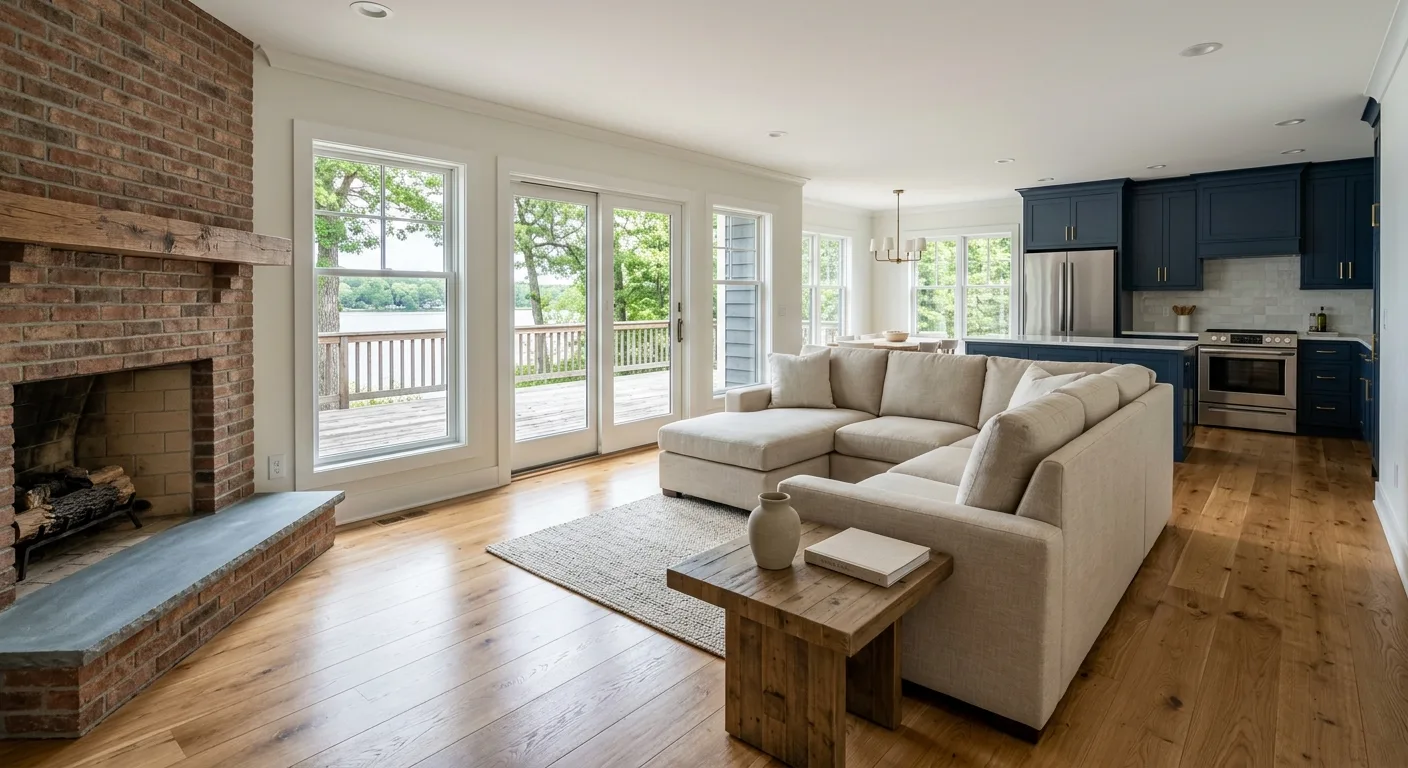
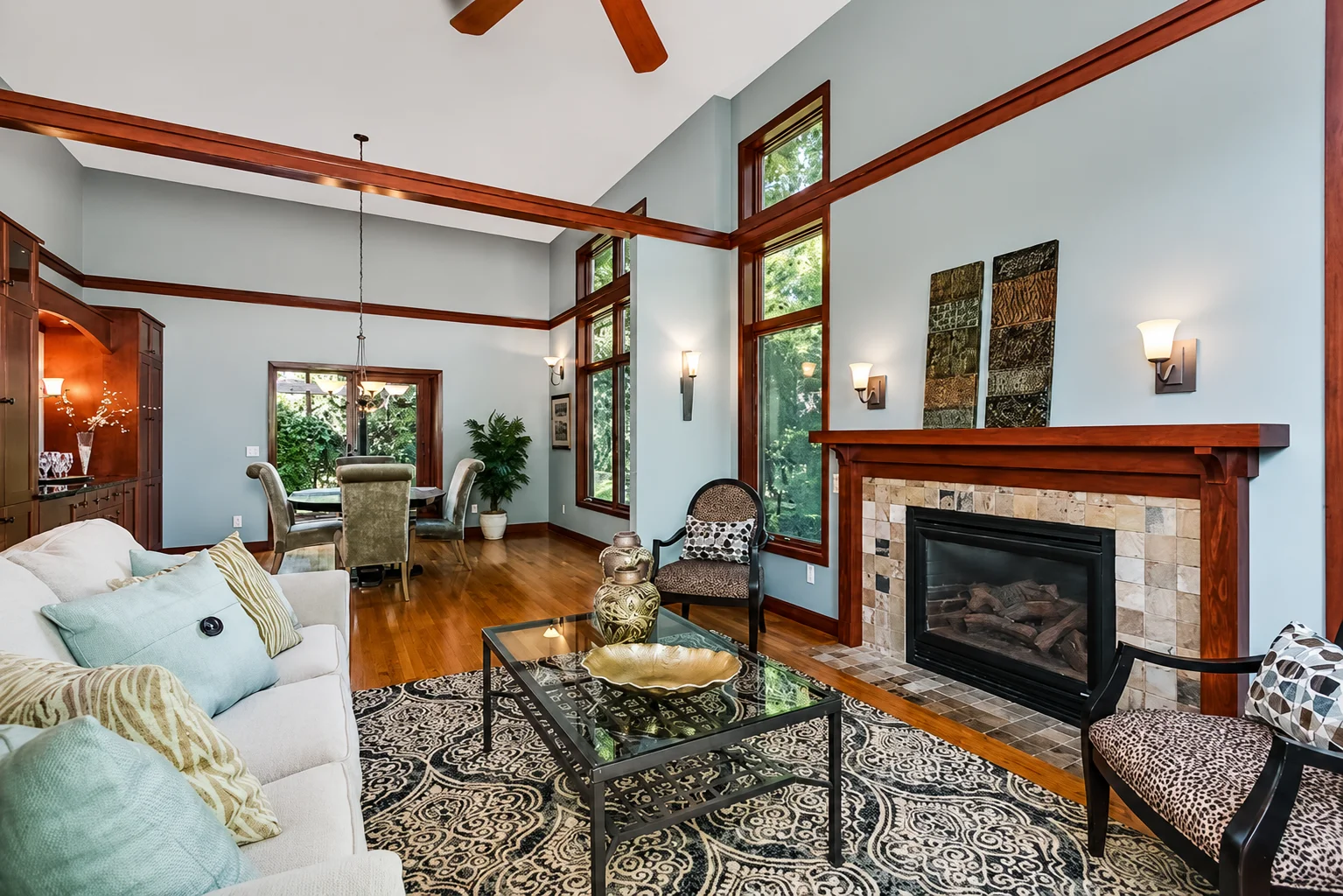
    Open-concept living room painted in a soft blue-gray with rich wood trim, fireplace surround, and vaulted ceiling.

    Coordinating deck color with your house (without matching it)
    The last piece is how the deck color sits next to the house, and the instinct most people have is exactly backward. They try to match the deck to the siding, and an almost-match reads like a mistake, like you tried and missed. A deck that's a few tones off, in the same warm-or-cool family, reads as intentional and lets the deck hold its own presence instead of blurring into the wall behind it. The pattern we see hold up: most decks look best a shade or two darker than the trim, in the same temperature family as the siding. That ties the exterior together without the deck disappearing into it. There's a timing angle here too that's easy to miss. If you're repainting the house exterior in the same season, plan the deck color and the siding palette together, because they're going to sit next to each other for years and it's far easier to build them to coordinate than to force a match after the fact. When we're handling both, we plan the deck alongside the residential exterior palette so nothing is finished in isolation. And remember the fade: since the deck floor will lighten over its first two winters while freshly painted siding holds its color longer, picking a deck tone that ages toward, not away from, your siding is the quiet trick that keeps the pairing looking right in year two, not just on install day.
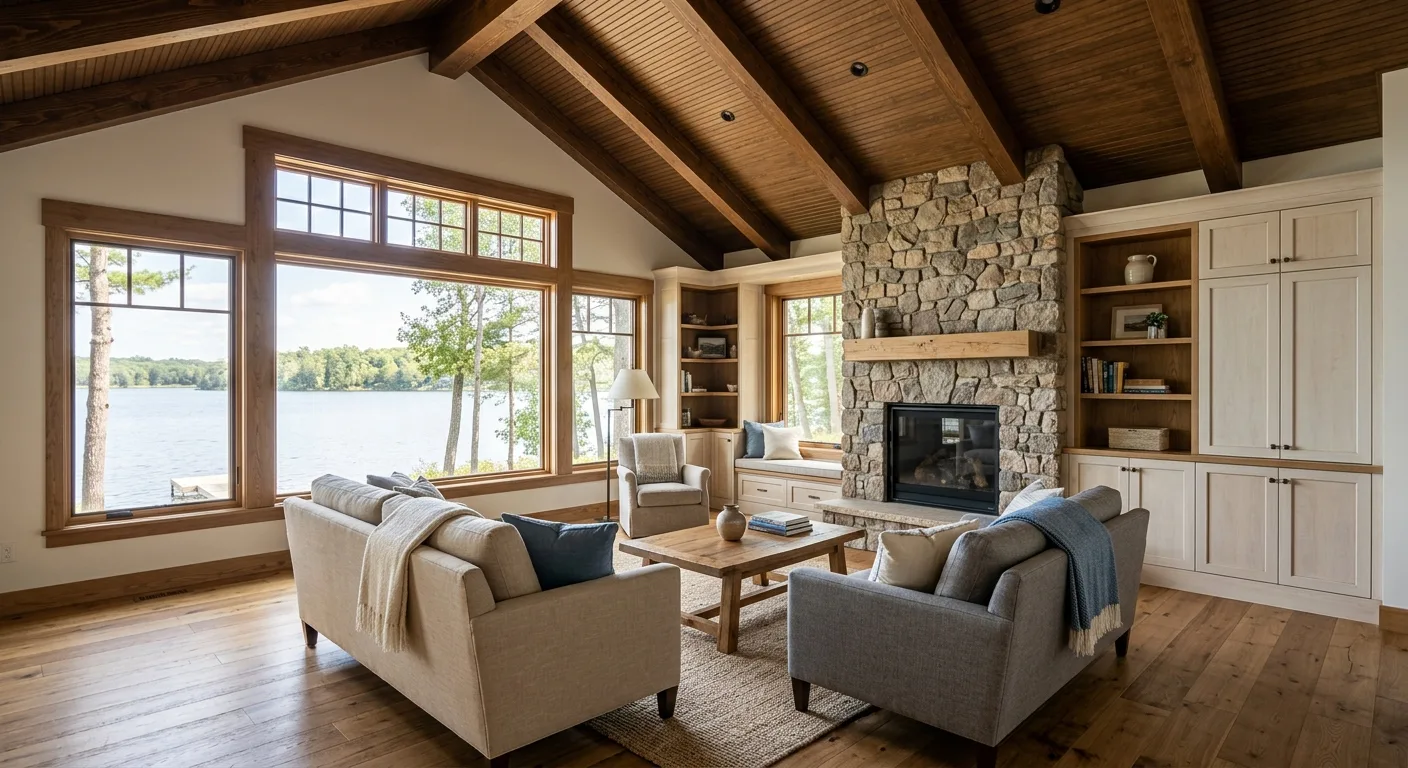
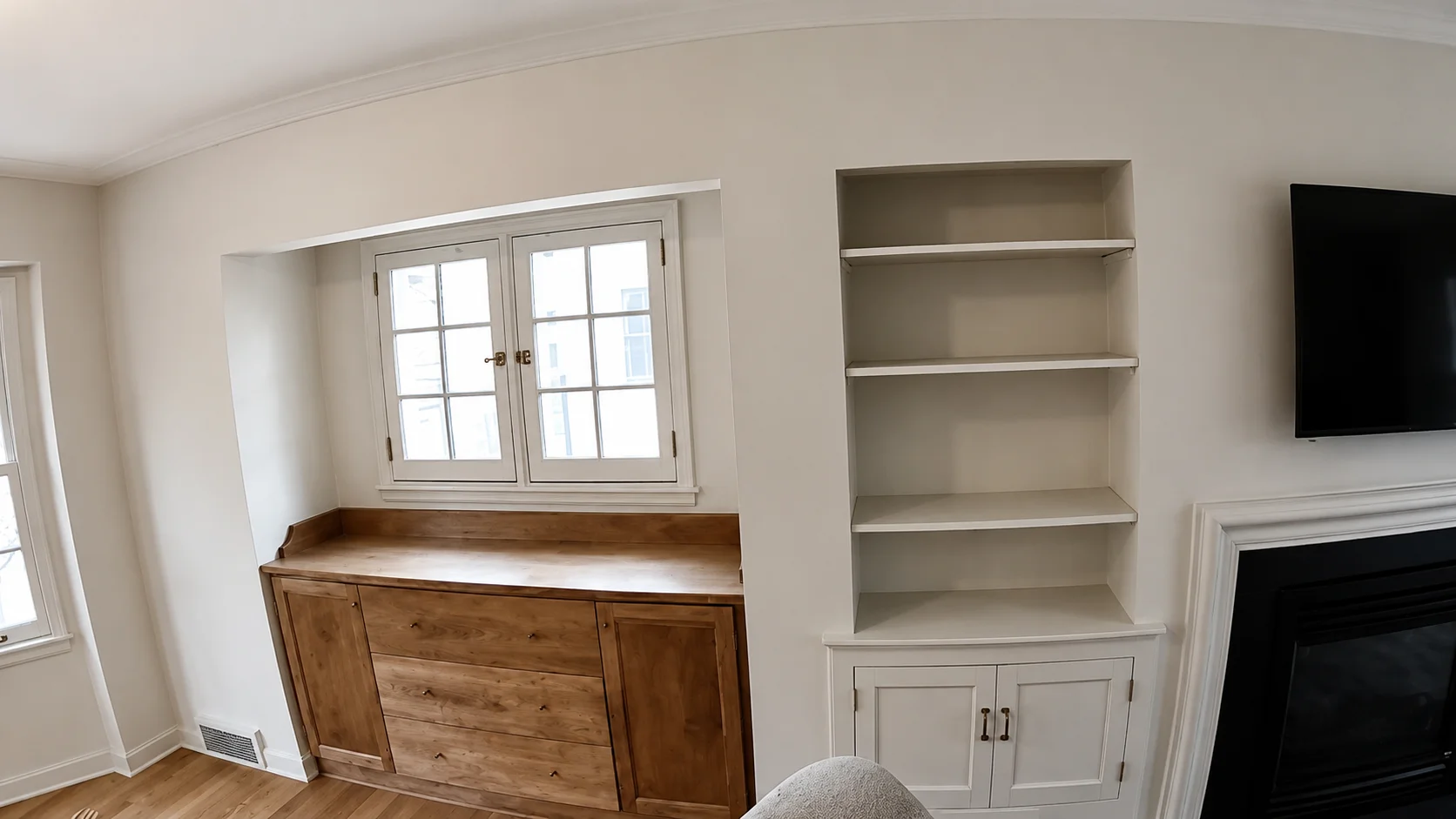
    Built-in window bench and shelving painted in a clean neutral finish beside a fireplace.

    When to wait on a deck color decision (the honest gate)
    We'd rather talk you out of staining at the wrong moment than sell you a color that can't hold, so here's the honest gate. Don't pick a stain color for a brand-new pressure-treated deck the week it's installed. The wood is usually too wet and mill-glazed to take stain, and whatever color you put down peels by the next spring, so the real first step is letting it weather a season, not choosing a swatch. Don't chase a color to hide a problem either. Stain is a finish, not a repair, and no tone covers cupped, split, or rotting boards, it just draws the eye to them. And the one most contractors won't say: if your deck was stained a year ago and still looks good, you don't need a new color yet at all. Semi-transparent usually has 2 to 3 years in it, so wait until it starts fading before you re-coat, and you'll save yourself a full strip you don't need. When you are ready, we serve the Twin Cities metro from Prior Lake, fully insured, in business since 2000, with a 2 to 3 year warranty on exterior work. No emergency service and no after-hours claims, just a straight recommendation on color, product, and timing before any work starts. Tell us what's going on and we'll walk your deck, or get a free estimate to start. Free estimate, no pressure: (612)-987-1566.
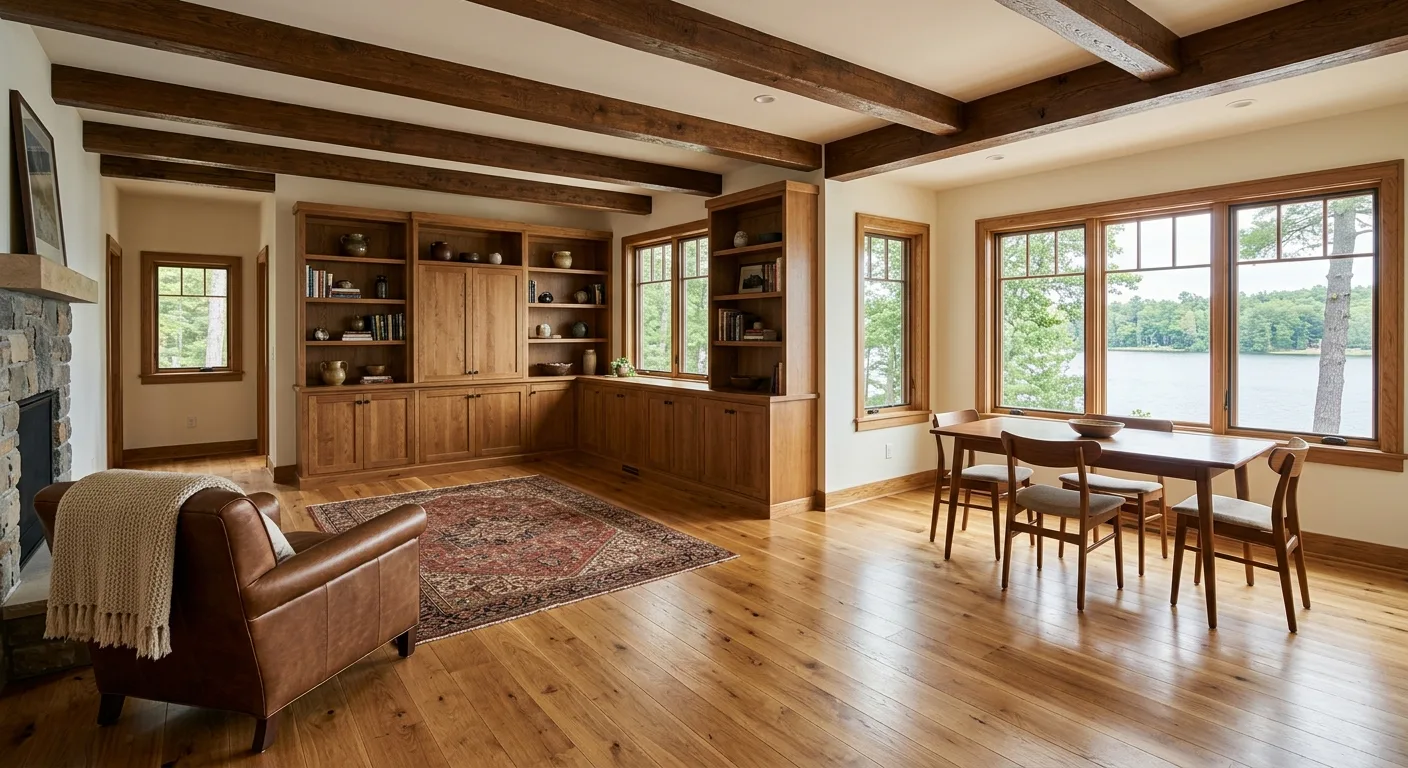
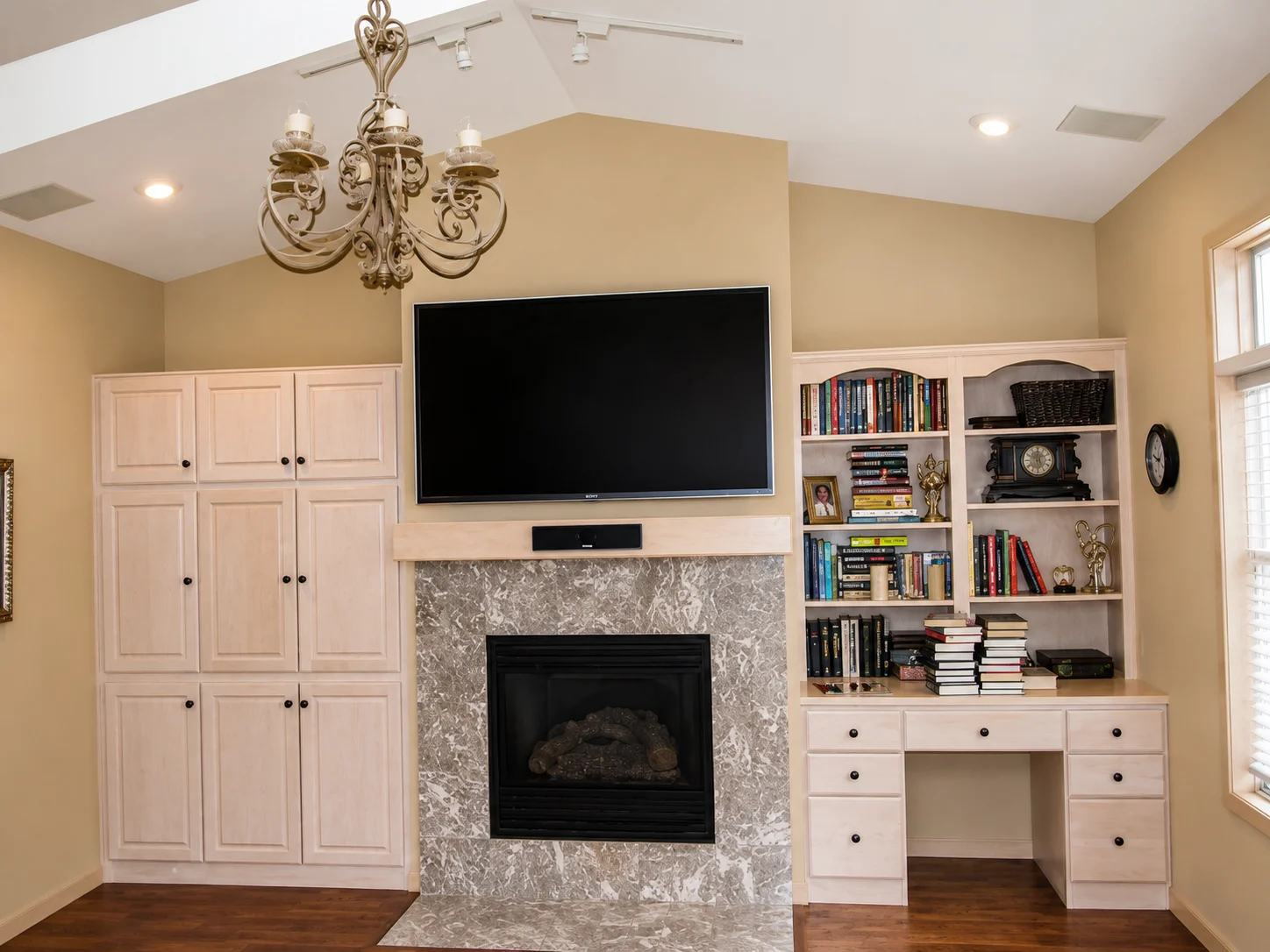
    Custom built-in cabinetry and fireplace surround finished in a light painted tone with integrated shelving and desk.

    FAQ

    Ready to start your project?